

How to Install Strip Drains in Nerang Homes & Driveways
If you’re a homeowner in Nerang, you know all about our wild weather. One minute it’s brilliant sunshine, the next, the skies open and dump a bucketload of rain. While we often need the rain, seeing it pool on your driveway, around your patio, or worse, head towards your home’s foundations is enough to make any Aussie homeowner nervous.
That’s where a simple but brilliant solution comes in: the strip drain. You’ve probably seen these slim, grated channels along the edges of driveways or in commercial car parks. They’re the unsung heroes of stormwater management, quietly channeling water away from where it can cause damage. For many homes in our hilly Nerang landscape, getting surface water under control isn’t just a convenience—it’s essential for protecting your property.
Installing a strip drain Nerang-style might seem like a job for the pros, and for complex situations, it absolutely is. But for a straightforward DIYer with a decent level of fitness and some patience, it’s a project you can tackle over a weekend. This guide will walk you through the entire process, from planning to that first satisfying downpour where you watch the water disappear exactly as planned.
Key Takeaways:
- Strip drains are effective surface drains designed to intercept and redirect water runoff, preventing pooling and potential damage.
- Proper planning is 90% of the job. Identifying the low point and planning where the water will safely discharge is critical.
- Getting the gradient (or 'fall') right is non-negotiable for the drain to work effectively.
- Safety is paramount, especially when using tools and working underground. Always dial before you dig.
What Exactly is a Strip Drain?
Before we start digging, let’s get familiar with the product. A strip drain, also known as a channel drain, is a long, narrow trench drain covered by a grate. It’s designed to catch surface water along its entire length, unlike a single drain point.
The system typically consists of three parts:
- The Channel: This is the U-shaped or V-shaped trench, usually made from polymer concrete or tough plastic, that sits in the ground.
- The Grate: This is the visible part, the metal or plastic grill that sits on top of the channel. It needs to be strong enough to handle foot or vehicle traffic, depending on where you install it.
- The Outlet: This is where the channel connects to a pipe that carries the water away to your stormwater system.
Planning Your Strip Drain Installation
Rushing this part is the biggest mistake you can make. A poorly planned drain is just a fancy hole in the ground.
1. The Basic Starter: Filter Jugs & Faucet-Mounted Filters
1. Find the Water’s Path: Wait for the next bit of rain or grab the garden hose. Watch where the water flows and, most importantly, where it pools. You want to place the strip drain across this flow path to intercept the water. The most common spot is at the base of a sloping driveway or across a paved area that butts up against the house.
2. Choose Your Discharge Point: This is crucial. Where is all this collected water going to go? You have a few options:
- Into a Stormwater Pit: The best and most common solution. You can connect your drain outlet directly to an existing underground stormwater pit.
- Into a Sump Pit: If you don't have a low-point stormwater pit, you can create a sump pit (a deep hole filled with rubble) that allows water to slowly seep into the surrounding soil. This is good for areas with sandy soil.
- To a Garden Bed or Lawn: Only if it's a safe distance from your house and won't just create a new problem elsewhere. You must ensure the water can disperse without causing erosion.
3. Check for Services: This is not just a suggestion—it’s a rule. Before you pick up a shovel, call 1100 or use the “Before You Dig Australia” website. This free service will mark the location of underground gas, electricity, water, and communication lines on your property. Hitting one of these is dangerous, expensive, and a surefire way to ruin your weekend.
4. Gather Your Tools and Materials: Being prepared makes everything smoother.
You’ll need:
- Strip drain channel (length as required)
- End cap or outlet adapter
- PVC pipe to connect to your discharge point
- Concrete mix (for haunching/support)
- Crusher dust or road base (for a stable base)
- Grate
- Shovel and/or spade
- Wheelbarrow
- Spirit level and a long, straight board
- String line and line level
- Tape measure
- Safety gear: gloves, safety glasses, ear protection (if using machinery)
The Step-by-Step Installation Guide for Your Nerang Home
When you do need to call a plumber, don’t just pick the first one you find in the phone book. Look for someone local who understands Queensland housing and regulations. A good Plumber Helensvale based, for instance, will know all about our local water pressure issues and common problems in area homes.
Non-negotiable, make sure they are licensed and insured. Get advice from your neighbours or browse online reviews. The most professional plumbers are usually the ones who have a lot of work because when someone does a good job, it spreads like wildfire.
Preventive Measures are Less Expensive than Treatment
Alright, let’s get our hands dirty. This is the process for a typical strip drain Nerang installation on a driveway.
Step 1: Mark Out and Excavate the Trench
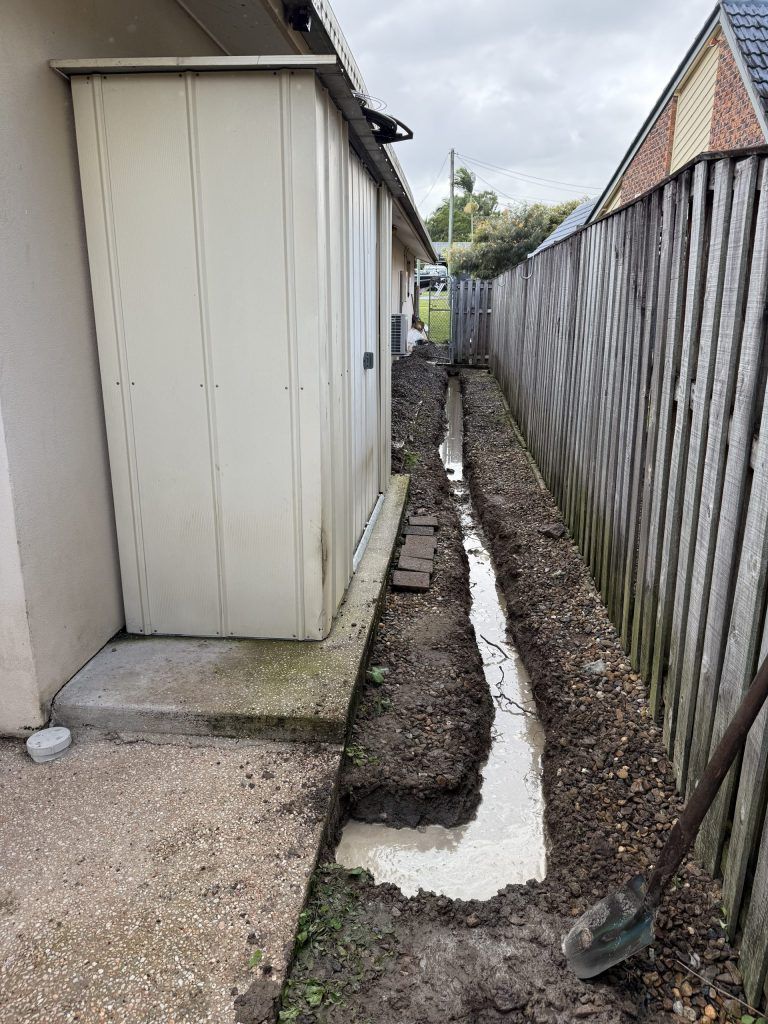
Using your string line as a guide, mark the path for your drain. Now, start digging. The trench needs to be significantly wider and deeper than the channel itself to allow room for a base, concrete, and the pipe connection. A good rule is to make it about 150-200mm wider on each side and 150mm deeper.
Step 2: Create a Solid Base and Set the Fall
This is where the magic happens. Pour about 50-75mm of crusher dust into the bottom of the trench and compact it down firmly. This base must have a consistent slope, or ‘fall’. The Australian standard is a minimum fall of 1:100 (that’s a 1cm drop for every 1 metre of length). Use your spirit level on the straight board, or set up a string line with a line level to get this slope perfect in your base.
Step 3: Dry Fit and Connect the Pipework
Before you set anything in concrete, do a dry run. Place the channel pieces into the trench on your sloped base. Connect them together (they usually just clip or slot). Attach your outlet adapter and the PVC pipe that will run to your stormwater pit. Make sure everything fits and the water has a clear path to flow.
Step 4: Concrete the Channel in Place (Haunching)
Once you’re happy with the fit, it’s time to lock it in. Remove the channel and mix your concrete. Place the channel back in. Now, pour concrete along both sides of the channel to “haunch” it in place. This concrete acts as strong side support, preventing the surrounding soil from shifting and cracking your channel. Crucially, do not put concrete under the channel—this can disrupt your carefully set fall. The channel should still be sitting on its compacted crusher dust base.
Step 5: Final Checks and Backfilling
As the concrete sets, use your spirit level on the channel lip (not the grate) to do a final check for the correct fall. Once the concrete is firm but not fully cured, you can backfill the gaps on the outside of the concrete haunching with soil or sand. Leave the area directly around the channel grate clear.
Step 6: Install the Grate and Test
After the concrete has fully cured (usually 24 hours), click the grate into place. The final step is the most satisfying—grab the garden hose and run a strong flow of water into the drain. Watch it flow smoothly along the channel and disappear down the outlet pipe. Success!
FAQS
Q: What’s the difference between an ag pipe and a strip drain?
A: Great question! An ag pipe (agricultural drain) is a perforated pipe wrapped in a sock, buried in a trench of blue metal. It’s designed to collect subsurface water (groundwater). A strip drain is a solid, surface-level channel designed to catch surface water. They solve different problems.
Q: Is this a job I can handle myself, or should I just call someone?
That’s the big one, isn’t it? If you’re pretty handy, comfortable using a spirit level to get a consistent slope, and your plan for where the water goes is simple (like tying into an existing downpipe drain), then you can absolutely have a crack at it over the weekend. But, if your block is on a serious slope, the water has nowhere obvious to go, or you need to tap into the main stormwater line, it’s definitely worth getting a quote from a local Nerang landscaper or drainer. It can save you a massive headache down the track.
Q: How do I deal with all the leaves and gunk?
A classic Aussie problem! The good news is most decent strip drain kits come with a little lifesaver: a removable debris basket that sits right inside the channel under the grate. Every now and then, especially after a windy spell, you just lift the grate, pull out the basket, and give it a shake. It’s about two minutes of work that keeps everything flowing smoothly.
Q: My driveway is sloped – is that a problem?
Not at all – in fact, it’s perfect! A slope is exactly what you want. You’ll install the strip drain right across the very bottom of the slope. This acts like a finish line, catching all the water that runs down the driveway before it has a chance to pool on your flat section or, heaven forbid, seep into your garage.
Q: Should I worry about it freezing in winter?

You can pretty much scratch that one off your worry list here in Nerang. Our winters just don’t get cold enough for that to be a real concern. Our biggest battle is handling those intense summer downpours, which this drain is perfectly built for.
Wrapping It Up: A Dry, Happy Home
Let’s be real, installing a drain will never be as exciting as redoing your kitchen. But when you think about what it protects—your driveway, your garden, and the very foundations of your house—it’s easily one of the smartest investments you can make in your property.
A well-installed
strip drain Nerang system is a classic “set and forget” solution. You put in the work once, and for years to come, you get the simple pleasure of watching a heavy rain event from your window, coffee in hand, knowing the water is being managed exactly as you planned. No more puddles, no more panic, just a dry and protected home.